




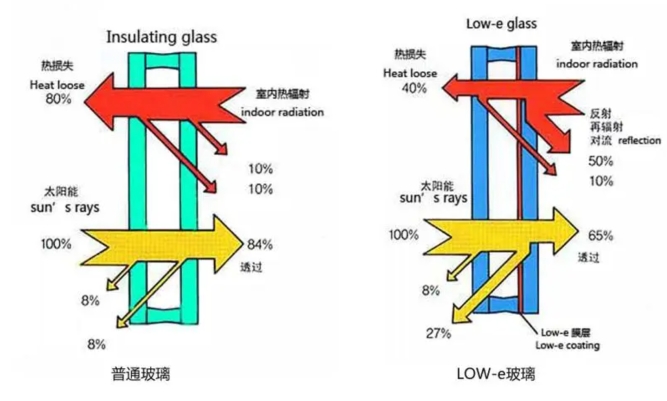
Low-E glass, also known as low emissivity glass, is a glass material that reduces the emissivity E to below 0.15 by coating a special film layer on the surface of the glass. This type of glass can effectively control the transmission of heat and light, and has the following characteristics and applications:
High infrared reflectivity: The film layer of Low-E glass contains a silver layer, which can reflect more than 98% of far-infrared thermal radiation, directly reflecting heat and achieving thermal insulation effect.
Low surface emissivity: Low-E glass has a low emissivity E, which reduces the heat energy radiated after absorbing external energy by 20.
Adjustable shading coefficient Sc: Adjust the solar transmittance as needed to meet the needs of different climate regions.
Significant energy-saving effect: In winter, Low-E glass can reflect indoor thermal radiation and retain heat; In summer, it reflects external heat and reduces the loss of cold air.
Superior optical performance: Low-E glass has high visible light transmittance and high reflectivity for infrared and ultraviolet rays, maintaining good lighting while achieving thermal insulation.
There are various production methods: Low-E glass can be produced through online coating and offline vacuum sputtering, with the latter providing more diverse product choices and colors.
Environmental benefits: The energy-saving characteristics of Low-E glass help reduce building energy consumption and have a positive impact on the environment.
Easy to maintain: Low-E film layer is usually sealed in the middle of hollow or laminated glass, requiring no special maintenance, just keeping the surface clean.
Selection suggestion: When choosing Low-E glass, parameters such as transmittance, solar heat gain coefficient (SHGC), shading coefficient (Sc), and heat transfer coefficient (K value) should be considered, and suitable products should be selected according to specific needs and regional climate.
Widely used: Low-E glass is suitable for various occasions such as residential, commercial buildings, and sunrooms, especially in areas with large glass areas and sufficient sunlight.
Low-E glass has been widely used in the field of construction due to its excellent energy-saving and environmental protection characteristics, and is one of the indispensable materials for modern green buildings.